
Cuphead: Don’t Deal with the Devil
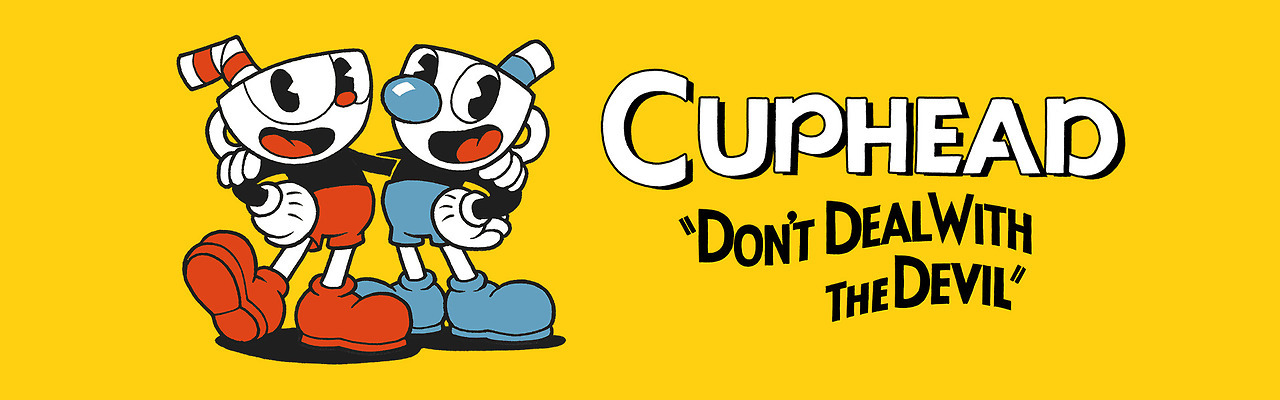
A different kind of retro
By: Chris Saturn
Developer: StudioMDHR Entertainment
Publisher: StudioMDHR Entertainment/Microsoft Game Studios
Platform: Xbox One/PC
In the grand scheme of things, video games are a very recent form of media. Printed art, music, and oral storytelling have been around for millennia, and mass-printed stories and organized stage productions have survived many centuries. Prior to the introduction of our hobby of choice, the youngest form of media was photography and film. At the dawn of the 20th century, theaters sprung up across the landscape, giving people a new way to escape reality for an hour or two. In addition to filmed motion pictures, hand-drawn animated shorts and films were a common and welcome attraction.
It feels quaint and silly to spell all of that out now. As amazing as it must have been at the time, film and animation have been around so long now that they pre-date everyone alive today. It’s how today’s kids will no doubt feel about picking up a controller. It’s just something that’s always been there.
When we talk about “retro,” we’re typically looking back only a handful of years, a few decades at most. But when speaking to animation and film buffs, looking back at the classics can span a period many times that. And, yet, there are certainly parallels. The humble beginnings of characters like Pac-Man and Mario can be compared to the early shorts of Mickey Mouse and Bugs Bunny.
It is, perhaps, because of this similarity that something like Cuphead feels so natural. I was fortunate enough to have grown up with classic Looney Tunes and Disney cartoons readily available on cable TV and NES games en masse at the local rental store. Cuphead feels like those two memories compressed into a high-density nostalgia machine.
At its core, Cuphead is a simple run-and-gun platformer. The controls are sophisticated enough to have required a six-button controller, and precise enough to show off modern design sensibilities, but still feel like something that could have come from the NES era. The graphics give the illusion of being from a century-old cartoon, but require complex modern hardware tricks to flow so seamlessly. The music and sound effects sound like they were ripped straight out of an old Popeye or Betty Boop cartoon. It’s a deception pulled off by modern hardware that pulls at the nostalgia strings harder than most actual classic games.
The story certainly feels like it’d be at home in a classic animated short or series. Cuphead and his brother Mugman are conned by the Devil into betting away their souls at a casino, and must pay back their debt by collecting the souls of others who’ve been similarly duped. It’s not incredibly deep, but it doesn’t need to be. It’s merely there to propel the action.
The gameplay feels basic, but has some hidden depth. From the world map, you can select between various platforming stages, side-scrolling shmup style stages, challenge stages, or boss battles. Completing these stages unlocks more of the world map, and more stages to be played. At the end of each stage, you’ll receive a letter rank, as well as a breakdown of tasks completed and items collected.
The platform stages play like something out of Contra or Metal Slug. Enemies and projectiles flood into the arena as you navigate basic platforms to reach the end of the level. Mario-esque coins are interspersed, which can be collected and used to buy power-ups at the in-game shop. Challenge stages and boss battles are typically single screen affairs, with boss fights being broken down into multiple, increasingly difficult phases. Shmup stages consist of Cuphead boarding a tiny bi-plane and taking out aerial enemies.
Aside from the shmup levels, controls remain the same in all arenas. In addition to basic movement, you have buttons to jump, fire, and dodge. Pressing jump again when in contact with certain objects or projectiles causes your character to parry via a basic double-jump. Holding the R Button will allow you to stay stationary while aiming in all directions. Otherwise, Cuphead’s finger-bullets go in the direction he’s moving at all times. When in shmup mode, the dodge button changes from a basic dash to a miniaturization effect, allowing you to squeeze between obstacles. The parry ability remains consistent throughout all game modes.
Aside from the obvious discussion around the unique aesthetic, most online discussion of the game seems to be around its difficulty, which many people are referring to as brutal. Having spent some time with the game, I just don’t see it. It’s tough, sure, but it’s also pretty forgiving. Compared to many of the classic games it’s hoping to emulate, there are a lot of modern amenities here that allow players to resume from failures with almost no consequence.
Infinite lives mean no desperation to preserve credits and multiple hit points mean no instant-deaths, ala Contra. Being able to purchase and equip different weapons from the world map mean you won’t have to hope that the power-up you want drops from an enemy or object mid-level. Death is followed by a short “retry/quit” screen that is fortunately accompanied by minimal loading to get you back into the action. Most stages and bosses can be quickly learned and completed with some practice, and attack patterns seem no less fair than in many of the games Cuphead has obviously drawn inspiration from. Modern games less and less appeal to retro gamers. And, yet, here’s a game that embraces its classic charm, both in appearances and in gameplay.
On a personal note, it’s just so refreshing to see a faux-retro game that isn’t going for pixel art. This attempt to look like an interactive cartoon is exactly what I’d been hoping for in games since I was a kid. This is what I saw in my head when I played classic Mickey Mouse games.
If you’re a fan of classic games or classic animation, don’t let this one pass you by.