
NES Classic Edition & Playing With Power Review
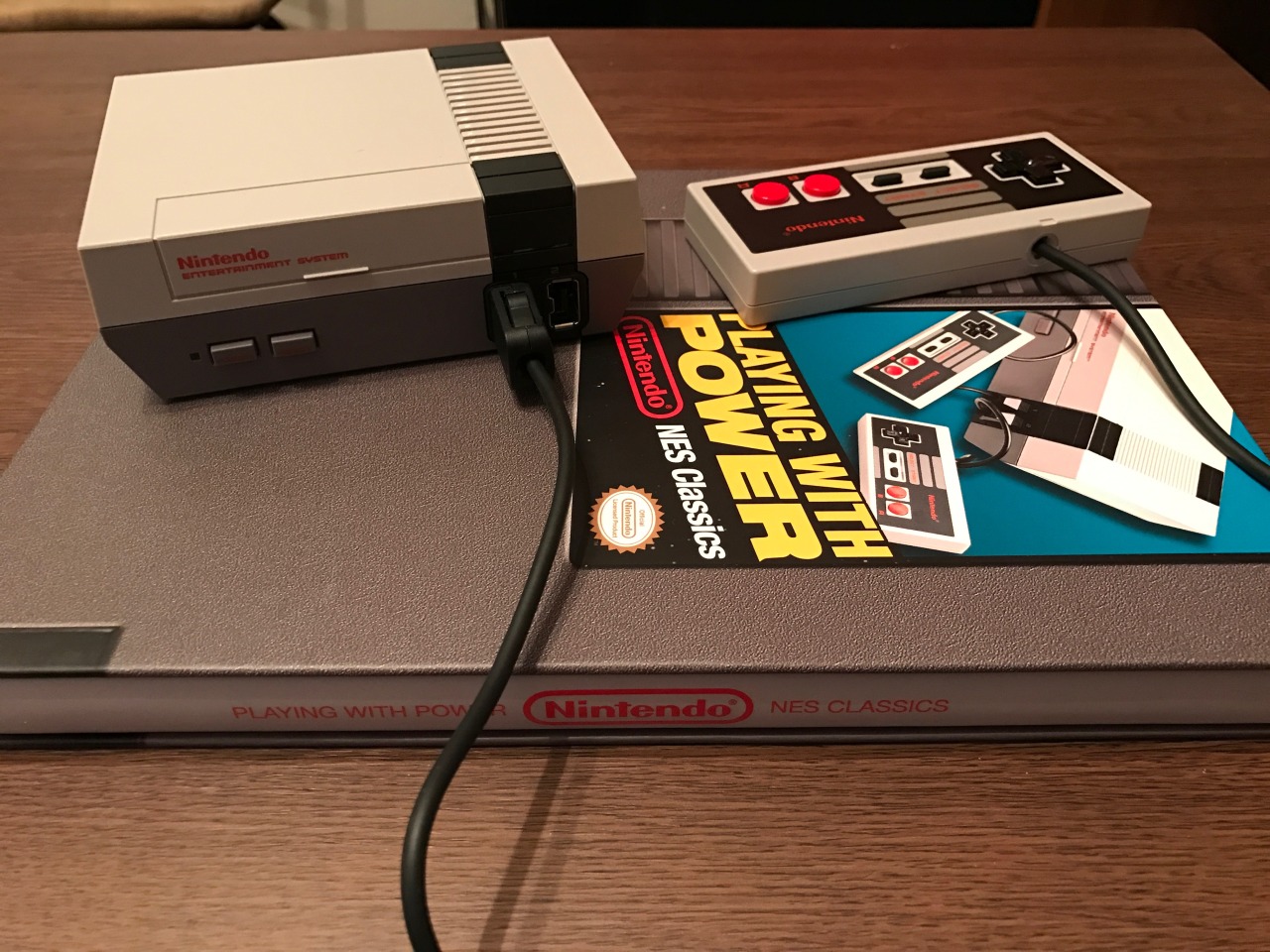
Well, it’s finally here: the NES Classic Edition. If you were one of the lucky (i.e. obsessively persistent) people to snag one on launch day then let me congratulate you, because I can say from personal experience that it wasn’t easy. If you were a scalper who picked one up on launch day then let me recommend a place for you to shove your NES Classic Edition.
Drama and availability issues aside, this is quite an impressive package from a marketing standpoint. It should be noted that I’m reviewing the NES CE with it’s companion book Playing With Power* which also released on 11/11, because from my experience it is meant as a complete package. While you can certainly enjoy the games in the NES CE without the book, I do feel that it was meant to add a crucial component to the experience, which I’ll dig into more a bit later.
And yes, I did stand in line for four hours to get one at midnight.
The Hardware
The NES CE, while smaller than an NES cartridge and barely twice as thick, is an impressive approximation of the original hardware. This isn’t just a cheap grey mold with some red and black paint slathered on, and it’s clear some care went into the actual production. Even the power button is impressively accurate, with its spongey feel. The only thing that even feels out of place is the ugly HDMI logo that I assume is required by law to be printed on the system in some way, but they buried it on the back corner far from view.
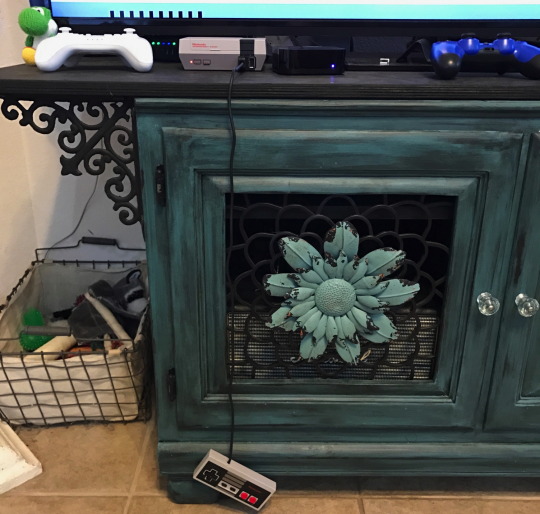
The controller is a dead-on replica of the original, with the only difference being some new manufacturing information imprinted on the bottom and the (here it comes) 28” cord length. That’s right, two feet and four inches. The assumption across the internet is that this was to force people to sit close to the system for two reasons:
- It’s more “authentic” to be jammed up against your TV, craning your neck upward until your vision gets blurry.
- Because you have to press the reset button to get back to the menu so you shouldn’t stray too far.
In either case this is a bummer, and it means those who don’t sit at a desk to play games have to thread a console through their living room and sit hunched on the edge of the couch. Is it more accurate? Well, yeah, I guess so. That doesn’t mean it doesn’t suck.
The Interface
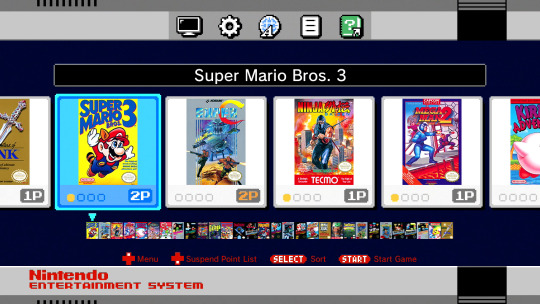
This is perhaps the most impressive part of the system, in my opinion. Changing filters, juggling various save states, overwriting SRAM saves, and changing games are all offered up in a simplistic, easy to parse menu that looks more akin to an actual game system than a computer running emulation software. Sure, the options are relatively limited, but it hits all the necessary notes without feeling overwhelming to people who could care less about palettes and cycle-accurate emulation. This is a huge win for the system, and something that a child just discovering it could figure out with little practice.
Each game is presented with box art, an indicator of how many saves states the game currently has saved, and a emblem signifying whether or not the game is one or two player. Pressing select will change how the games are sorted, and the menu at the top does little more than change filters and direct people to the website where the game manuals are hosted. The visual filters are well done, but I would’ve liked to have seen a scanline option that doesn’t also include the heavy blurring effect of the CRT filter. But, the CRT filter is arguably the most accurate way to play if you’re wanting to recreate some childhood memories.
The options presented here are everything Nintendo fans have been clamoring for since the Virtual Console launched and nothing that the average player doesn’t need. My only complaint is that it would be nice to have the manuals included in the actual system, since they’re required reading for first-time players of Final Fantasy and Startropics.
The Emulation
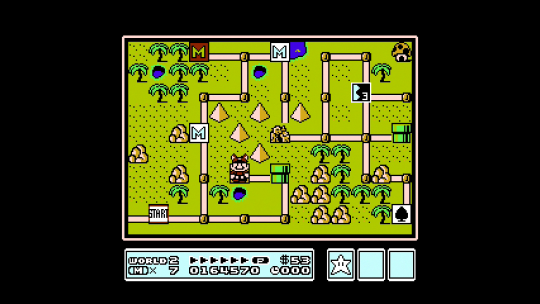
I’m not the kind of person who would likely notice things like sprite flicker and slowdown accuracy, but there were some very minor discrepancies in the form of removal of flashing screens and the use of updated roms.
While that might upset the most extreme purists, I can report that the games still play phenomenally. As someone who is unusually perceptive to controller input lag from battling with it across various setups in the past two years, I’m happy to report that there is none present when playing the NES CE.
The color palette of the games is much closer to the original** NES palette, and forgoes the garish colors that most emulators use these days. This makes for a more muted, easy to view picture. Combine this with the intentionally imperfect CRT filter and you’re pretty damn close to the experience so many of us grew up with. With the exception that you’re probably playing on a much larger screen.
The Experience
I feel that this is a crucial part of the NES CE, and it definitely should be taken into account. Nintendo has done much more here than provide an emulation box with a handful of games. From the painstaking recreation of the original box to even the marketing in the store I purchased it at, everything was made to look period appropriate.
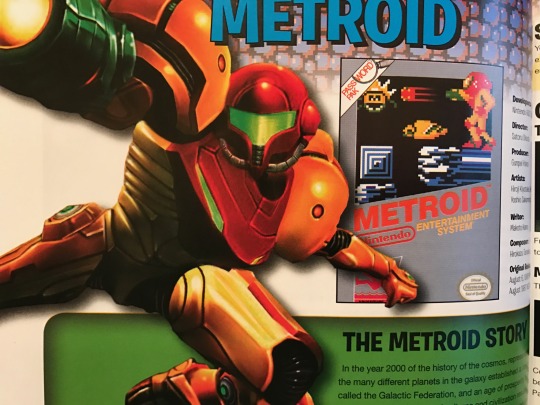
Additionally, Prima released Playing With Power on the same day, which happens to cover all 17 first-party games included. It basically reads like a greatest hits of Nintendo Power from the NES era, complete with Classified Information, Counselor’s Corner, and various other features ripped right from the pages of the magazine. No, there’s no new content here but things have been re-edited to look a little more modern. The pages themselves are unfortunately magazine quality, but the hardcover slipcase looks fantastic. Inside readers will find that some of the images they chose to use are a little questionable (what’s with the blurry, blown-up, modern-looking Samus?), and they’ve accidentally omitted the Legend of Zelda overworld map. No, they didn’t choose to not include it, there’s a section for it and the image is inexplicably missing.
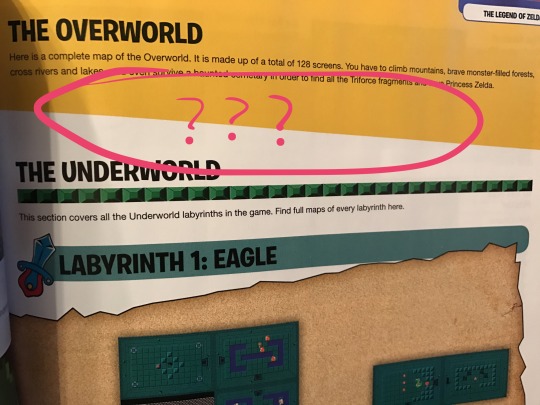
Anybody who has purchased a Prima product before is probably not going to be completely shocked by these strange oversights, but the book still contains tons of useful information and guides. Yes, this was a missed opportunity to produce a high-quality, officially licensed NES Bible.
The best thing I can say about it is that you should treat it like what it is: a bunch of magazine clippings. Sure, they’re a very nice collection of magazine clippings, but the basic content is still years old magazine and guide content that was inevitably rushed out the door to meet deadlines. It gets the job done, and it’s a heck of a lot easier and cheaper to obtain than a pile of old Nintendo Power magazines and guides.
But despite the issues with the book, Nintendo’s ploy worked. By all accounts the NES Classic Edition is not a system made or marketed towards me. I still have lots of these games in addition to dozens of emulation devices. Nothing in this package is new to me or even something I hadn’t experienced relatively recently.
But opening the box, plugging in an NES, cramming up against my TV, reading the manuals, and flipping through the pages of Nintendo Power built a perfectly nostalgic experience for me. I felt like a kid again, even though I was barely born when most of these games came out. I was taken back to nights reading magazines and sitting hunched over a glowing CRT. Even hitting the tiny reset button in frustration tugged at my heart strings.
And I have an actual NES hooked up to a CRT five feet away.
This carefully crafted experience is, I believe, what Nintendo was shooting for with this thing. Yeah, plenty of people are going to pick it up this holiday season, play Mario 3 for a week and then toss it in a closet. But there will also be plenty of people who venture outside the games they know, download the manuals, and share the system with children and loves ones. If you give it a chance, the NES CE really can take you back to a simpler time.
The Bottom Line
The NES CE is incredibly well done for what it is, with my biggest complaint being the controller cord length. It’s not that difficult to remedy with the deluge of accessories that have already hit the market (when they’re back in stock anyway), but it’s an issue nonetheless.
The interface and games themselves work perfectly, and the few options available integrate seamlessly into the experience. As a companion to the NES CE, Playing With Power still enhances the over all experience despite having an even larger list of issues.
If you’re the hardest core emulation junkie looking for a well-stocked device that offers a litany of granular options, then look elsewhere. This is manufactured nostalgia-in-a-box that’s more interested in evoking certain feelings than it is pushing the world of emulation forward, and I don’t think that’s a bad thing.
Now, let’s all go refresh Amazon repeatedly until they restock these things. I need a second controller, dammit!
* If you do pick up Playing With Power, it’s currently nearly 50% off MSRP on Amazon, and it’s well worth it at that price point.
** The way I understand the NES and how it displays on NTCS television, there is no “true” color palette. Only approximations of what seems to be the intended colors.