
Othello vs. Othello
By: Chris Saturn
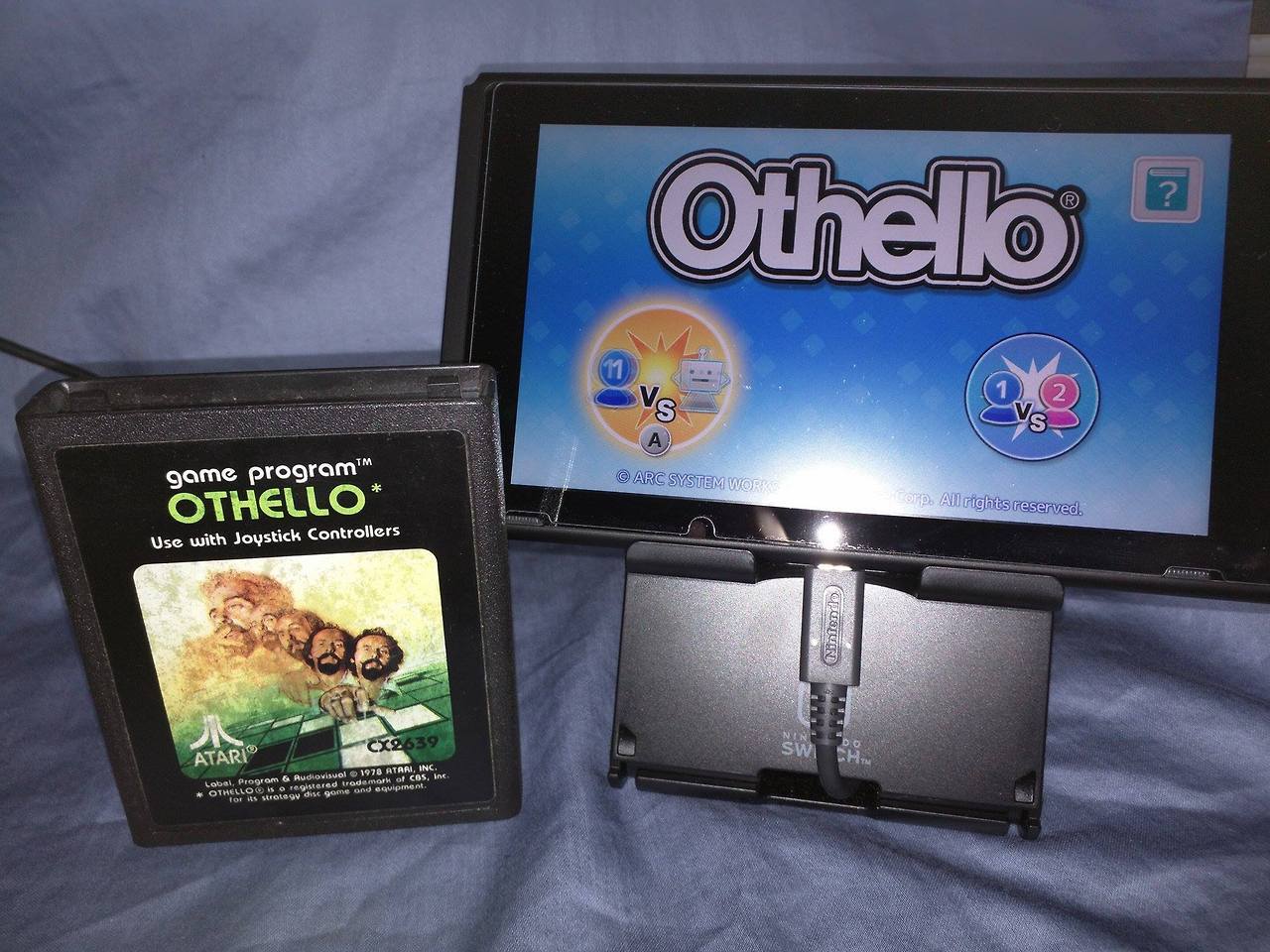
Othello. The Atari 2600 classic needs no introduction. The timeless gameplay offers up countless hours of strategy. But was a mere thirty-nine years enough time for people to enjoy the original, before we’re served this edgy new reboot on the Nintendo Switch? Let’s take a look at the original and the new version side by side and see how they stack up.
As we turn on the original Atari cart, we’re greeted with the game board. No fancy intro cinematics here, just pure, unadulterated Othello. Using the console’s GAME SELECT switch, we can choose between four game types. GAME 1 offers gameplay against a basic level AI opponent. GAME 2 serves up an intermediate opponent, and GAME 3 unleashes the full brute-force strength of Atari’s logic. GAME 4 changes things up by allowing you to play against another person. However, it’s 2017. Even if I had friends, it’d be a chore to convince them to play an Atari 2600 game from 1978. So I’ll just skip that one.
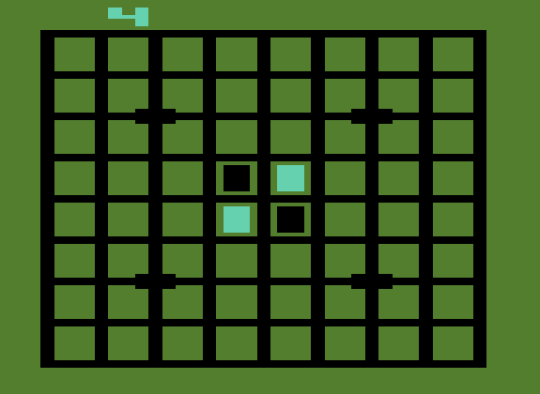
The graphics are simple, even for the Atari. If it weren’t for later releases like Ms. Pac-Man, we’d be left to assume that maybe the Atari couldn’t quite handle non-rectangular shapes. And yet, here I am, staring at a board full of green and white flickering boxes. I know, it’s scandalous that I’d imply that programmers at Atari might have rushed out a cheap port just to get more games on the market, but stick with me here. If you can wrap your head around the cutting-edge visuals, your next stop is the sound. I can’t find any records of what game won best soundtrack or best sound design in 1978, but I have to assume Othello was in the running. I mean, that half-bleep-half-fart sound when you place a piece? Sublime.
But, enough waxing nostalgic for yesteryear. Let’s jump back to the present and Arc System Works’ 2017 reimagining of the classic game for the Nintendo Switch. First, we start with a title screen. I guess that’s not a bad idea. For people who don’t know what game we’re playing, this is a good reminder. Second thing we notice? Circles. Where were those 39 years ago, Atari? Also of note, music. I mean, for those who prefer something other than beeps, I guess that’s okay.
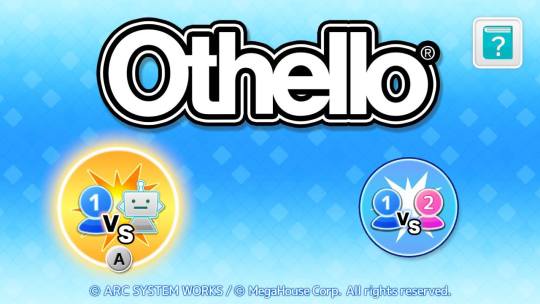
On our title screen, we have just a couple of options: vs computer, vs player, and manual. The manual is simple and straightforward, and explains the rules of the game. I mean, the Atari version had a manual that did that, too, but it was made of paper. But I didn’t lose the manual for the Nintendo Switch version 25+ years ago, so I’m gonna have to give the edge to the new one there.
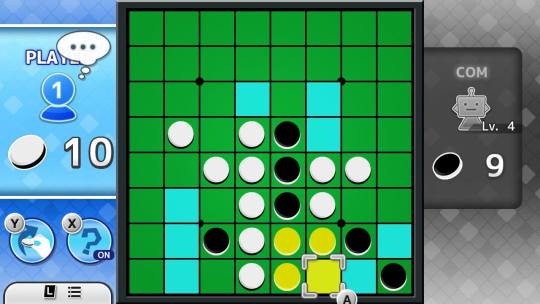
Upon selecting your game mode, you’re presented with a few options. You can change your controller style from both Joy-Con (recommended for grip mode or when attached to the console), to an individual Joy-Con in either vertical or horizontal layout. That’s great for single handed gameplay, freeing your second hand for covering the screen from your opponent. When playing against the computer, there’s two more options here: the ability to choose your opponent’s difficulty (on a scale that now goes up to sixteen, represented here by an angry red robot face), and you can choose your color. Sure, there’s only the two options, but… man. We’re already going well above the Atari original.

As the game starts, we’re presented with even more circles. Amazing. While the gameplay is the same as ever, there are now two more options on the screen. Pressing Y will allow you to undo your previous move, and pressing X will allow you turn off the guide, which helps out by highlighting all available moves in blue. Pressing the L button brings up a submenu that allows you to change your control configuration, or exit the game. Oddly, the + and - buttons do nothing.
Okay, for anyone who couldn’t tell, a lot of this was just satire. Obviously, Othello pre-dates the Atari by nearly a century, and has been available on dozens of platforms over the years. The reason I chose to look at this in comparison to the Atari version was because that’s the last version of the game that I bought on console. I’m sure people will try to tell me that there’s been another, better version over the years, but I don’t buy into the propaganda put forward by the Big Othello Industry that says I need to re-purchase Othello every few years.
More importantly, we received this game from Arc System Works for review purposes, and I wanted to frame this in a way that correlates with our retro flavor. Looking solely at the new game, it’s clearly a very clean and competent port of the classic game. If you love classic board games, or simple strategy games, this is a nice title to be able to take with you on the Switch. It’s also a simple, easy to explain game that can help showcase the multiplayer functionality of the Joy-Con. It’s also more convenient than lugging around an actual Othello board with you, and requires less clean-up.
Certainly, the title is going to benefit from its early release in the system’s life, as it’d likely be ignored amidst a sea of Mario Kart, Splatoon, and other upcoming titles. But during the early days of the system’s life, this is a solid multiplayer title to show off your new hardware in a friendly way. It’s safe to say that this may have surpassed the Atari version as the best version of Othello I now own.
This post, along with all of our content, is made possible by our patrons over at Patreon.com/retrowarriors.